
The Repeat Purchase Trigger: full report

In simulations of AG1 and HUM Nutrition subscribers, what kept people paying was not the supplement but permission to stop asking whether it works. The morning ritual didn’t just retain simulated subscribers; it displaced the efficacy question, and it worked most on those who would otherwise scrutinise hardest.

Public brands · modelled studySimulated customers, modelled on real people. Results are directional.
the ritualWhat subscribers actually buy: permission to stop asking

AG1 · HUM

6Simulated customers, three per brand
USMarket
2 runsMethod: one simulation per brand, AG1 and HUM Nutrition

D2C subscription supplements. Public brands used as market examples; neither is a client.

In short

  • Among simulated subscribers who adopted a morning ritual, the habit all but removed the “is this working?” question, not by answering it, but by making it feel beside the point.
  • In the AG1 run, the most retained simulated subscribers were the most analytical, not the true believers. The ritual worked as a relief valve for skeptics who were glad to stop deliberating.
  • In the HUM run, the personalisation quiz turned “a product I’m evaluating” into “a routine I built and own”. For these simulated subscribers, cancelling felt like self-abandonment rather than a product decision.
  • The common thread across both runs: the subscription left the product-evaluation frame before the 6-month renewal point arrived. What got renewed was not a supplement. It was a self-image.
Run your version →

The retention clock

The retention clock

By the renewal point, the decision has already moved.

  1. Days 1–14Onboarding touchpoints: the window to name exactly where the product lives in the morning.
  2. Day 7Ritual adoption signalled the 3-month retention outcome (AG1 run).
  3. Month 3Morning-ritual adopters retained at a predicted 35+ points above non-ritualisers (AG1 run).
  4. Month 6Renewal point. For ritual-engaged subscribers, cancellation had already left the product-evaluation frame (HUM run).
Modelled milestones from the two simulations. The retention advantage is a prediction, not measured churn.

Simulated customers

Simulated customers

One profile from each brand run.

Portrait of Sarah Chen, a simulated customer.
Simulated customer

The Ritual Anchor · AG1 run

Sarah Chen, 31

Fitness marketing manager · Portland · AG1 subscriber

“If I asked myself ‘is this working?’ I’d have to run an experiment to know. But I don’t ask myself that question in the morning. I just make it.”
Full profile
Profile
Sarah’s AG1 subscription is technically about filling nutritional gaps but functionally about anchoring her morning. She built her routine around the shake prep: scoop, cold water, shake, drink before the first meeting. The cancellation conversations in her head are never about whether AG1 works; they’re about what would happen to her morning if she stopped.
Traits
health-optimizerroutine-builderwellness-identityD2C-subscriberritual-committed
Decision pattern
Sarah makes subscription decisions based on how well a product fits an existing routine rather than on isolated efficacy evidence. AG1 won not because she verified the supplement facts, but because the shake ritual had already claimed the 7:15am slot in her morning.
Purchase trigger
The ritual format (powder, water, shake) creates a physical action sequence that becomes habitual faster than a pill or capsule. The action is the habit, and the habit is the product’s value, whatever the observable outcomes.
Stall point
Supply disruption. If a shipment is delayed by more than 3–4 days, Sarah’s morning routine breaks. The interruption forces her to notice the absence, and possibly to notice that she can’t clearly attribute any outcome to AG1.
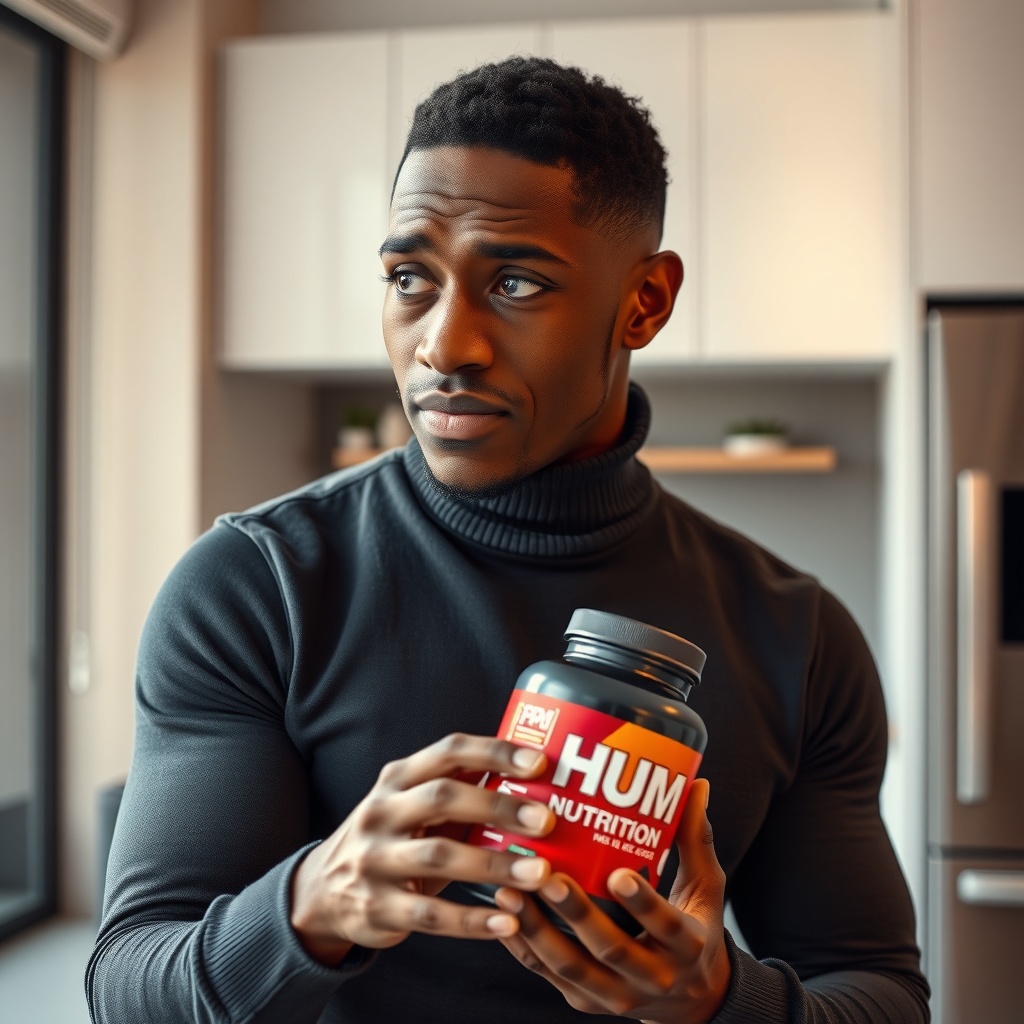
Portrait of Marcus Johnson, a simulated customer.
Simulated customer

The Efficacy Agnostic · HUM Nutrition run

Marcus Johnson, 40

Marketing director · New York · HUM subscriber

Full profile
Profile
Marcus subscribed to HUM Nutrition after his partner recommended it, framed as “personalized” supplements for his specific needs. He completed the quiz, received a recommendation and has reordered four times. He cannot point to a single observable improvement, but he hasn’t cancelled either, because “I haven’t given it enough time” is a more comfortable position than “I wasted $90 on something that doesn’t work.”
Traits
health-optimizerD2C-subscriberefficacy-agnosticpersonalization-susceptiblesunk-cost
Decision pattern
Marcus stays subscribed because cancelling requires an active decision to declare failure, while reordering is the passive default. The personalisation framing (quiz, then recommendation) makes him feel complicit in the choice, which raises the psychological cost of abandoning it.
Purchase trigger
The personalisation quiz creates ownership of the recommendation. If HUM told him what to take, quitting feels like arguing with himself as much as with HUM.
Stall point
A highly specific observable outcome fails to materialise. If Marcus can name a concrete expectation (for example, “better sleep within 4 weeks”) and it doesn’t happen, the sunk-cost anchor breaks and he reassesses the whole subscription.

Cross-brand finding

Cross-brand finding

The product being purchased is the permission to stop asking questions.

Across both the AG1 and HUM simulations, the least expected finding was this: the simulated subscribers most likely to form a ritual were the same ones who would otherwise apply the most scrutiny to a repurchase decision.

Analytical, identity-invested simulated customers didn’t just skip deliberating at the moment of use. They set the question aside on purpose, and the ritual is what made that feel natural rather than dishonest.

In the HUM run, quiz-based personalisation moved the subscription from “a product I’m evaluating” to “a routine I built.” In both runs, the “believers” were not the simulated subscribers most likely to stay.

What we tested

What each brand run found.

AG1Confirmed
AG1Confirmed D2C supplement subscribers who ritualise morning consumption before 9 AM retain at 35+ percentage points higher than non-ritualisers at 3 months; the mechanism is temporal habit anchoring, not efficacy belief.

In this run, the retention lever was not efficacy but sequence. Once taking it was tied to an existing morning cue (kettle, toothbrush, coffee), repurchase stopped being a deliberate choice and became a default. Less expected: the habit held especially well for skeptics, not despite their analytical bent but because of it. For them the ritual was a relief valve, and the most rigorous simulated buyers were the most relieved to use it.

HUM NutritionConfirmed
HUM NutritionConfirmed Among ritual-engaged subscribers, the cancellation decision migrates from product evaluation to self-concept protection; quiz-based personalisation is the mechanism.

In this run, for ritual-engaged simulated subscribers, the cancellation decision had left the product-evaluation frame before the 6-month renewal point arrived. One simulated subscriber in this run described cancelling not as a refund decision but as self-abandonment. What kept these subscribers was less clinical credibility than ownership of a routine they had built. The product stopped being the thing judged; their sense of themselves as someone who takes care of themselves was.

“I want to believe in it. There’s something about having a dad who had a cardiac scare at 54 and being 40 yourself. You want there to be something you can do every day that means you tried. AG1 is a vessel for that need. And I know it.”
A simulated customer in the AG1 run

In their words

From the simulation.

AG1 · subscriber

“The ritual has displaced the efficacy question entirely. Not because I’ve stopped caring, but because the morning anchor makes caring feel unnecessary.”
Sarah Chen, AG1 run

AG1 · subscriber

“My professional knowledge of the funnel architecture (ambassador wall, buried per-serving cost, subscription-first UX) doesn’t protect me from it. It just makes me a more articulate participant in it.”
A simulated customer in the AG1 run
More in their words

AG1 · near-buyer

“If three people in my wellness cohort started talking about AG1 unprompted, I’d probably override all my sourcing objections because FOMO is real and I know it about myself.”
A simulated near-buyer in the AG1 run

HUM Nutrition · subscriber

“The moment I take that quiz and get a personalized routine, it stops being just a product. It becomes my routine. I built it. Canceling it starts to feel less like returning a thing that didn’t work and more like quitting on myself.”
A simulated customer in the HUM run

HUM Nutrition · buyer

“The vibe is very ‘we did the science so you don’t have to,’ and that is exactly the sentence that makes me want to do the science myself.”
A simulated customer in the HUM run

HUM Nutrition · buyer

“If I’m three months in and my skin looks the same, I genuinely don’t know if I’d stick around. I want to believe, I’m willing to try, but I’m not someone who’ll pay forever on faith alone.”
A simulated customer in the HUM run

What it means

Implications for D2C subscription brands.

Reframe onboarding from efficacy promise to sequence instruction.

In this simulation, the retention lever was not “here’s what this will do for you.” It was “here’s exactly where this lives in your morning.” Messaging that names the cue explicitly (“before your first coffee,” “after you start the kettle”) is not flavour copy. It is the primary retention mechanism, and it should appear in Day 1 to Day 14 touchpoints ahead of any ingredient or outcome claim.

Identify ritual adopters automatically by Day 7.

In the simulation, when subscribers took the product was an early signal of 3-month retention, separate from NPS, satisfaction scores or reported outcomes. A simulated subscriber taking it on 5 of 7 mornings before 8:30 AM in week one was already on a different retention path. Intervention cadence, win-back spend and cancellation-save messaging should be tuned to that behavioural signal, not to survey self-report.

Protect ritual adopters from efficacy-challenge content.

For the analytical simulated subscribers, becoming aware of the habit itself was a cancellation trigger. Prompts that ask “are you seeing results?” or push comparative outcome tracking force exactly the deliberation the morning anchor has successfully suppressed. For this group, retention is protected by not inviting scrutiny: satisfaction surveys and outcome dashboards at 60 or 90 days should be opt-in, not default.

Risks

Risks

What could break this.

A single credible efficacy challenge could break the ritual.

One simulated customer in the AG1 run named their own breaking point: a credible nutritionist questioning the clinical basis of the claims, or a published review contradicting the formula’s combined benefit. The ritual’s shelter from scrutiny is not immunity; it defers scrutiny. When the question returns, it returns all at once, and the unexamined months make it land harder.

Personalisation without outside proof can backfire with skeptics.

Some simulated customers in the HUM run arrived already doubting personalisation claims (“we did the science so you don’t have to” made one want to do the science themselves). For them, a routine built on the quiz, without outside evidence behind it, raised distrust rather than loyalty.

Confidence & limits

Directional signal, not validated research. Each finding comes from simulation runs with simulated customers: 2 brands, 6 simulated customers modelled. AG1 and HUM Nutrition are public brands used as market examples; neither is a client. Treat the numbers as directional: the direction and size of the effect is the finding, not a forecast. Check the findings with your own customers before a decision commits to them.

Related studies

← Back to the studyAll studies →

Run your version of this decision.

Bring the call you’re weighing. First answers from simulated customers in minutes, then check them with your own customers.