TECH-002 · Consumer Technology · Smart Home · United States · April 2026
Smart Home Abandonment
Why US households stop using smart devices — and which re-engagement interventions actually work
Personas8 decision-architecture agents
GeographyUnited States, suburban and urban
Income range$68K–$155K HHI
Simulation runs48 across 6 hypotheses
Top re-engagement delta0.58 (Ecobee occupancy sensing reveal)
The problem
The user who hasn't opened your app in 14 months is not confused about your product. They simply have no reason to open it.
The smart home industry's working diagnosis for abandonment is a product quality problem: too complex, poor onboarding, not enough user education. The prescription follows from the diagnosis — more tutorials, simpler UX, better setup flows.
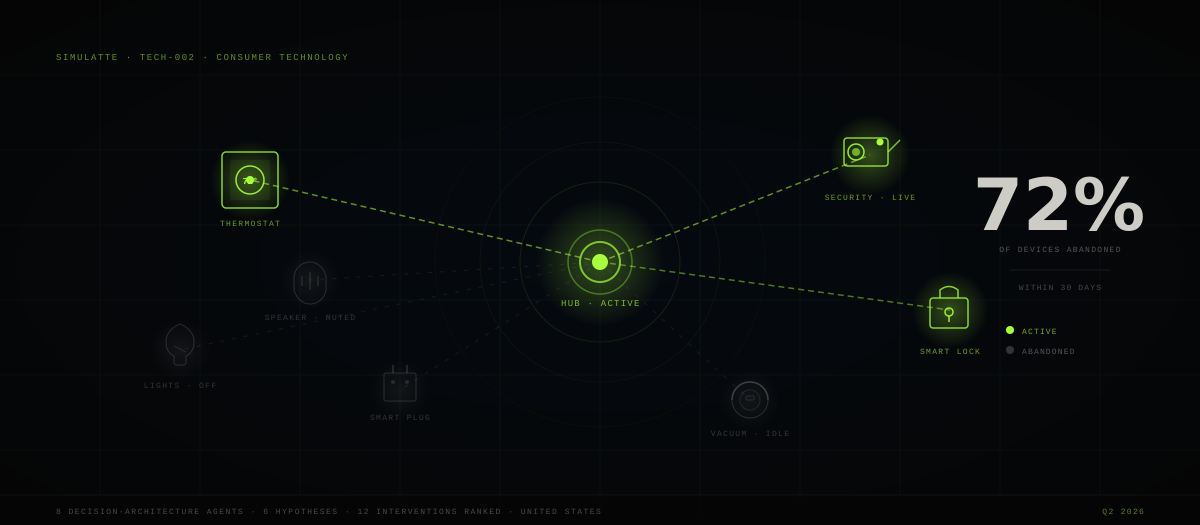
This study found the diagnosis is wrong. The devices in this population were correctly set up and initially used. Engagement collapsed at the 30–90 day mark — not because the device stopped working, but because the aspirational identity that drove purchase ("I'm a smart home person") normalized and was not replaced by a specific, habitual use case. The product worked. The reason to keep engaging with it expired.
Re-engagement follows the same logic in reverse. Use-case discovery interventions — specific, personalized, addressing a real need — averaged 13× the re-engagement delta of generic simplification messaging across all personas and device categories tested. The barrier is not product comprehension. It is the absence of a compelling new reason to engage.
The strategic reframe
Stop explaining the product. Start showing users what it can do for them right now.
Current re-engagement approach
"Here are tips to get more out of your smart home."
"Re-enable learning mode for energy savings."
"Your device has these 12 features you haven't tried."
Use-case discovery approach
"Your manual overrides happened on workdays. There's an occupancy sensor that fixes this. It takes 2 minutes."
"Amara might be home right now. Set up an arrival notification in 2 minutes."
"Your Nest doesn't know when you've left. Your August lock does. Connect them."
Generic tips assume the barrier is knowledge. The barrier is relevance. These are different problems with different solutions.
Simulated population
8 abandonment archetypes across 5 ICP types
Each persona represents a distinct combination of purchase motivation, device category, abandonment mechanism, and re-engagement potential. The study covered the full spectrum from complete ecosystem abandonment to narrow-stable use that never expanded.
Derek Okafor
41 · Houston · IT Director · Capability Maximizer
The geofencing thing was annoying so I turned it off. I'd turn it back on if I knew it was reliable.
Sandra Kowalski
38 · Naperville · HR Manager · Security Buyer
I pay for it in case I need to look something up. I just don't use it day to day.
Marcus Webb
33 · Denver · UX Designer · Convenience Seeker
I just override it every morning. It's easier to just tell it what to do now.
Carol Hutchins
56 · Tampa · Dental Hygienist · Tech-Skeptic Convert
I use it every day. I just don't know what else it can do.
James Reyes
29 · Chicago · Product Manager · Ecosystem Builder
Everything works. I just don't really think about it anymore.
I haven't opened the app in over a year. I assume it's fine because the temperature is always fine.
Tom Barrett
47 · Phoenix · Ops Manager · Security — Retention
The cameras I use every day. The lights thing in the garage — I just turned it off.
Nadia Foster
31 · Brooklyn · Marketing Coord. · Renter
I'm not the person this stuff is designed for. I don't have a house.
Key findings
Five findings that change how you think about the re-engagement problem
01
Use-case discovery outperforms generic simplification by 13×. The mechanism is not knowledge — it is relevance.
Six scenarios, each testing a specific use-case discovery intervention against a generic comparison treatment. Across all personas and device categories, the use-case discovery treatments averaged a 0.52 re-engagement delta. The generic treatments averaged 0.04. The gap is consistent and large. Showing a user a specific new thing the device can do for them right now — grounded in their actual situation — creates a reason to engage. Generic tips about features do not. The implication: every generic "tips to get more from your smart home" email is burning re-engagement budget with near-zero return.
When to intervene matters as much as what to say. The 45-day window is open; the 120-day window is closed.
Identical content delivered to James Reyes at 45 days post-decline produced a delta of 0.49 — active re-engagement, 25 minutes of configuration, project identity reopened. The same content at 120 days produced a delta of 0.11 — "good idea for someday." At 45 days, the project identity that drove initial setup has not yet frozen. The user can still see a new chapter. At 120 days, the identity has calcified: the device is now "just a part of the house." Current smart home platform re-engagement triggers (typically 90-day or reactive post-churn) miss the optimal window entirely. Moving the trigger to 45 days requires a CRM timing change — no product work, no data infrastructure investment.
4.5× difference in re-engagement delta. Same content. Same persona. 75-day difference in timing.
03
The highest re-engagement delta in the study required behavioral anomaly detection — not CRM segmentation.
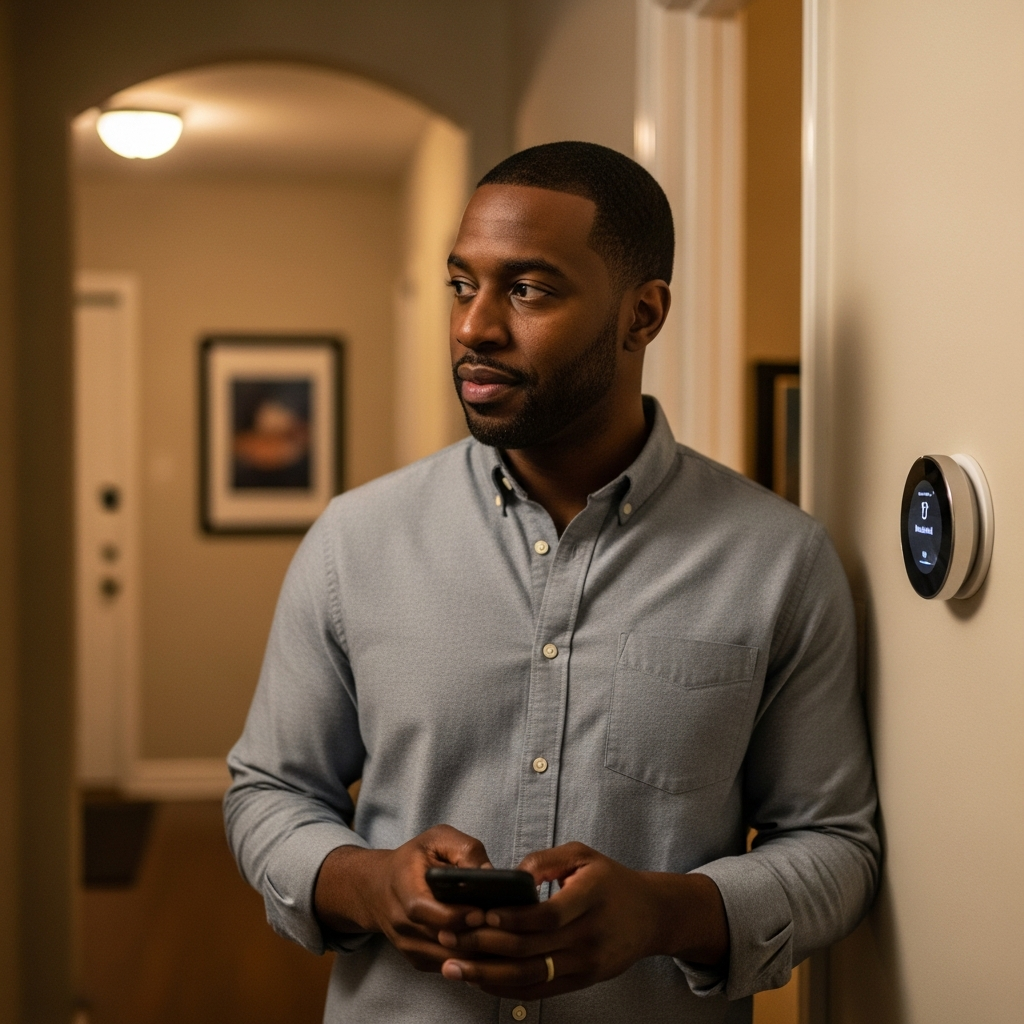
Marcus Webb's re-engagement (delta 0.58) was produced by a notification that diagnosed his specific failure mode: smart learning disabled, manual override events concentrated on workdays, root cause WFH schedule variability, device-level solution occupancy sensing. This level of personalization cannot be produced by standard CRM segmentation. It requires usage-pattern anomaly detection: identifying that smart features are disabled, that override events cluster on specific days, and mapping that pattern to a specific intervention. The data to produce this insight exists — in Ecobee's own device telemetry. It is not being used for re-engagement. The infrastructure investment to build this is medium-high; the intervention ROI once it exists is very high.
The feature that re-engaged Marcus was already on his device. He didn't know it existed. The platform didn't tell him.
04
Threat reactivation for security device owners is the highest-variance intervention in the study. The same message re-engages or accelerates cancellation depending on execution quality.
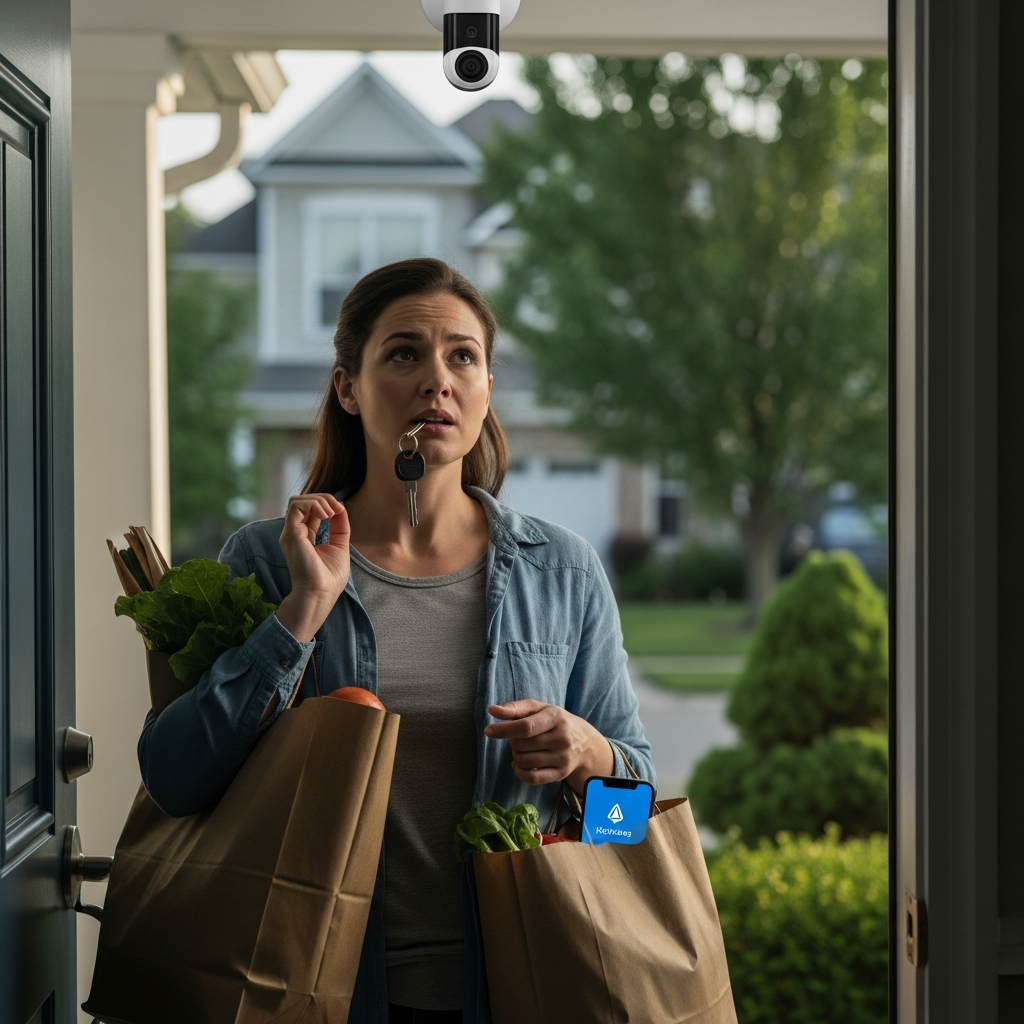
Sandra Kowalski's Ring abandonment followed a textbook threat-salience-decay pattern: purchased during elevated threat perception, notification fatigue, app dormant, subscription approaching cancellation. Two threat reactivation treatments were tested. The calibrated version — specific neighborhood incident data, factual framing, no alarm language — produced partial re-engagement (delta 0.19 pre-adjustment). The poorly executed version — generic security language, implicit blame for inactivity — produced an active cancellation consideration that did not exist before the intervention. Sandra's HR background made her immediately capable of identifying the persuasion mechanism; the backfire was rapid. This result is not Sandra-specific. Any psychologically sophisticated user exposed to manipulative threat framing will respond the same way. The protocol implication: establish copy review standards for all security re-engagement content before deployment.
Same intent. Different execution. One re-engages. One causes churn. There is no safe default for this intervention type.
05
36% of US households are renters. The smart home ecosystem is implicitly designed for the other 64%.
Nadia Foster is an active daily user of her Google Home Mini. She is not abandoning her device; she uses it every day. What she is not doing — and cannot do — is expanding into the ecosystem that drives the majority of smart home product revenue: thermostats, smart locks, security cameras. She rents. She cannot install any of these devices. This is a product architecture problem, not a marketing problem. Current ecosystem expansion strategy — cross-selling additional devices to existing voice assistant owners — fails entirely for the renter segment. Renter-appropriate pathways (Bluetooth-only smart bulbs, digital-only capabilities, multi-user household features) represent an addressable segment of approximately 36% of US households that no current smart home platform expansion strategy reaches.
Renter-appropriate smart home capability is an untested product position. No current platform owns it.
Top interventions tested
Four use-case discovery interventions — and what the stimulus copy looked like
Each scenario tested a use-case discovery treatment (T1) against a generic comparison treatment (T2). The stimulus copy below is the actual notification or email content used in each simulation. The contrast between T1 and T2 is the strategic signal.
"We looked at your override history. Your manual adjustments were concentrated on weekday mornings — when your schedule said 'Away' but you were actually home. There's a feature that fixes this: SmartHome/Away occupancy sensing. It detects whether someone is in the room. No schedule inference. Takes 2 minutes to enable."
This stimulus required three diagnostic steps the platform already had the data to produce: (1) detect that smart learning was disabled, (2) detect that override events clustered on specific days, (3) map that pattern to the specific feature that addresses it. The result was re-engagement with the highest delta in the study.
Segment: Ecobee users who disabled smart scheduling in the past 60 days with workday override clustering · Execution complexity: VERY HIGH (requires usage-pattern anomaly detection)
App engagement1×/month → 6×/week
Smart learningRe-enabled (4 months off)
Product advocacyPeer recommendation activated
Rank 2 · SCN01-T1 · Derek Okafor · Google Nest
Use-Case Discovery — Daughter Arrival Monitoring
Push notification · Re-engagement delta: 0.56
"Amara might be home right now. Did you know you can see it in the app? Set up a Home Arrival notification — front door camera + August Lock confirmation. Takes 2 minutes."
The stimulus required one piece of data that standard device telemetry does not provide: knowledge that Derek has a child and that the child arrives home alone. This can be obtained via life-event signals (household composition surveys, school-year demographic enrichment) or self-reported data. Without it, the intervention cannot be generated. With it, the intervention is irreducibly relevant to a real, current parenting need.
Segment: Nest owners with children ages 8–14 and low app engagement · Execution complexity: HIGH (requires household composition or life-event data)
App engagement1×/week → 4×/week
New routines configured3 (that weekend)
Identity narrativePartially restored
Rank 3 · SCN06-T1 · Priya Anand · August + Nest
Ecosystem Value Visualization — Cross-Device Integration Gap
"Your Nest doesn't know when you've left. Your August lock does. Right now, your thermostat is guessing your schedule based on patterns. Your lock observes the exact moment you leave. Connect them and your Nest Away mode becomes accurate within seconds of you locking the door."
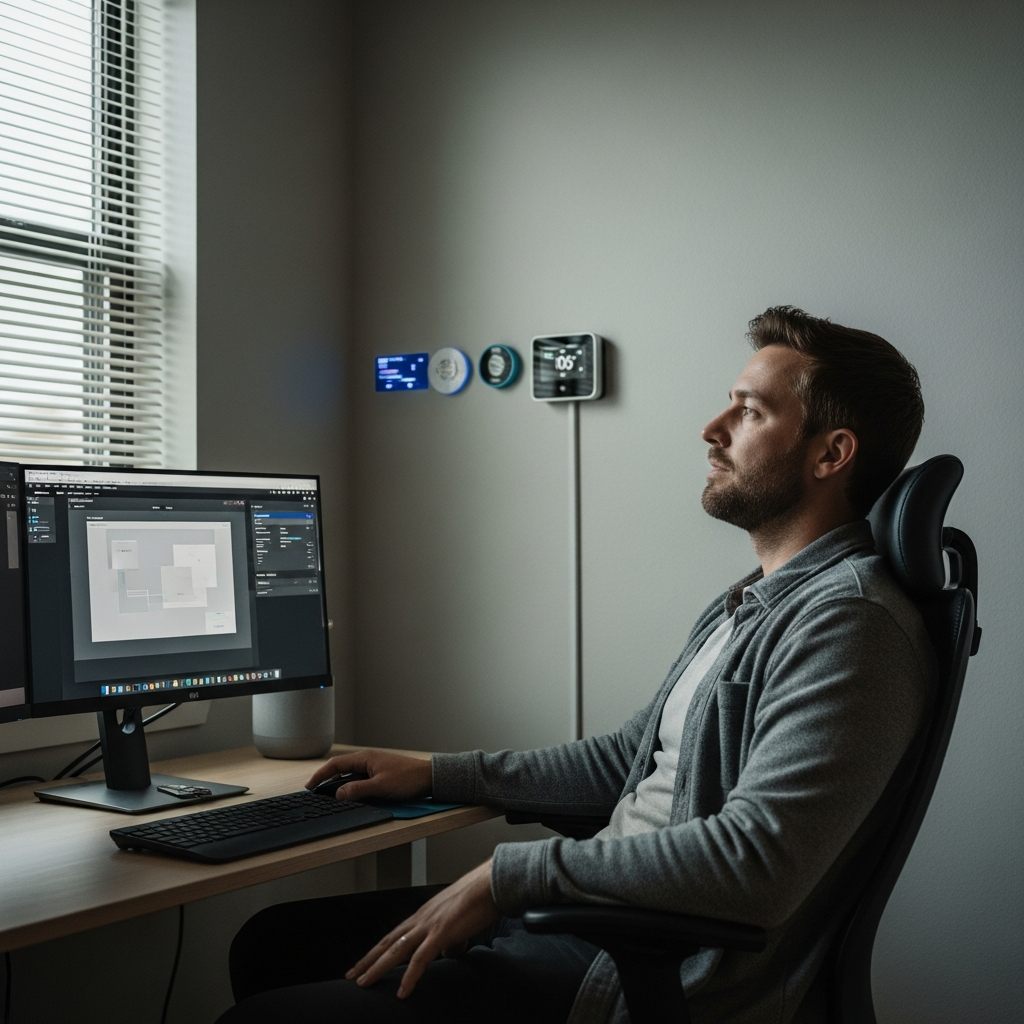
The technical precision of the stimulus ("your Nest is inferring; your August is observing") created an immediately compelling gap that Priya, as a software engineer, could evaluate as a genuine system inefficiency — not a marketing claim. The notification produced the deepest single re-engagement event in the study: app opened for the first time in 14 months, integration configured in 9 minutes, partner added to household.
Segment: Owners of both August and Nest devices in the same household · Execution complexity: VERY HIGH (requires cross-platform data visibility)
Google Home appFirst open in 14 months
Integration configured9 minutes
Partner added to householdYes (following Saturday)
Rank 5 · SCN04-T1 · Carol Hutchins · Amazon Echo
New Capability Reveal — Zero-Friction Voice Command Demo
Push notification · Re-engagement delta: 0.41
"Try this right now — just say it: 'Alexa, remind me every day at 8am to take my vitamins.' No setup. No app. Just say the words."
The intervention design is the finding: a single voice command embedded directly in the notification eliminates the gap between discovery and action. Carol does not need to navigate to a settings page, read a tutorial, or evaluate whether the feature is worth exploring. She just says the words and the capability is demonstrated in real time. The stimulus requires nothing beyond device-type identification — achievable with standard CRM segmentation.
Segment: Echo owners with 3+ months activity, only 1–2 active skill categories · Execution complexity: LOW (standard push notification)
New use cases established4 within one week
Household adoptionDave added medication reminder
Word-of-mouthColleague + neighbor conversations
Design principle 01
Specific beats generic. Always.
Every high-performing intervention named a specific feature, specific situation, or specific benefit. No high-performing intervention used general language about product capabilities. The more specific the stimulus, the higher the delta.
Design principle 02
Remove all steps between discovery and action.
The Carol result (voice command embedded in notification) and the Marcus result (one-tap enable) both required zero navigation. The Derek result required one tap. Friction between reading the notification and taking the action is the primary attrition point for this intervention type.
Design principle 03
The data to personalize exists. It is not being used.
Three of the four top interventions required data that the platform already had: override event patterns, device ownership combinations, usage frequency decay curves. The gap is not data availability — it is the infrastructure to route that data into content personalization.
Why simulation
Survey data tells you what people say they'd do. Simulation shows you what they'd actually do — and why the difference matters for re-engagement content.
The core challenge in smart home re-engagement research: you cannot easily ask disengaged users what would re-engage them. They don't know. They've habituated to their current level of engagement. They can't evaluate hypothetical interventions against real behavioral context because they've forgotten what active engagement felt like. Survey-based research on this question generates optimistic self-reports that do not predict real behavior.
Research Question
Standard Approach
Simulatte Simulation Approach
Which re-engagement message would work?
Survey disengaged users. Ask which messages appeal to them. Rank by stated preference.
Simulate re-engagement event from first notification read through post-event behavior change. Measure re-engagement delta, not stated preference.
What caused abandonment?
Retrospective survey: "Why did you stop using your smart home device?" Users report proximate causes (complexity, no reason to use it) — not the precise behavioral sequence that produced abandonment.
Simulate the 30–90 day abandonment window in real time. Identify the specific event (schedule mismatch, geofencing failure, notification fatigue) that triggered reclassification.
How does timing affect re-engagement?
Cannot test timing differences in survey research. A/B testing timing requires a live CRM infrastructure and months of data collection.
Simulate identical content at 45-day and 120-day windows. Measure the delta difference directly. Produce actionable CRM timing recommendations in days, not months.
What happens when an intervention backfires?
Survey respondents report what they think they'd do when annoyed. Actual cancellation behavior is not captured until after the bad campaign runs.
Simulate the backfire scenario: Sandra reads the poorly executed threat reactivation notification and enters a live cancellation consideration. The mechanism is visible in the transcript. The intervention can be redesigned before it ships.
The advantage is not speed, though it is faster. The advantage is behavioral resolution — seeing the decision architecture from the inside, including the interventions that accelerate churn before they ship.
Apply this research
Run the same methodology against your device category, your lifecycle stage, your user base.
TECH-002 is a public research study. The methodology — 8 personas, 6 hypotheses, 12 scenarios, full simulation transcripts — can be replicated against a specific device category, customer segment, or re-engagement campaign brief. The output is a ranked intervention scorecard with stimulus copy, execution complexity ratings, and backfire risk assessments.