Premium purchase is not luxury behavior. It is a category-specific permission structure.
Between 2021 and 2024, while most CPG brands watched commodity category share bleed to private label, a parallel phenomenon went largely unstudied: a significant segment of US shoppers simultaneously increased spend in specific premium categories during the same inflationary period. Premium olive oil. Specialty coffee. Craft condiments. Better-for-you personal care. These categories saw volume and value growth even as commodity categories lost share.
The industry's working explanation — "affordable luxury treats" — is a marketing narrative, not a decision architecture. This study maps what is actually happening: which shoppers trade up, in which categories, under which conditions, and what the decision looks like from the inside. Eight decision-architecture personas, six hypotheses, 48 simulation runs.
The central finding: there is no single premium marketing strategy that works across all shopper types. Each of the four permission architectures requires a different intervention — and using the wrong one either fails silently or actively contaminates the conversion path.
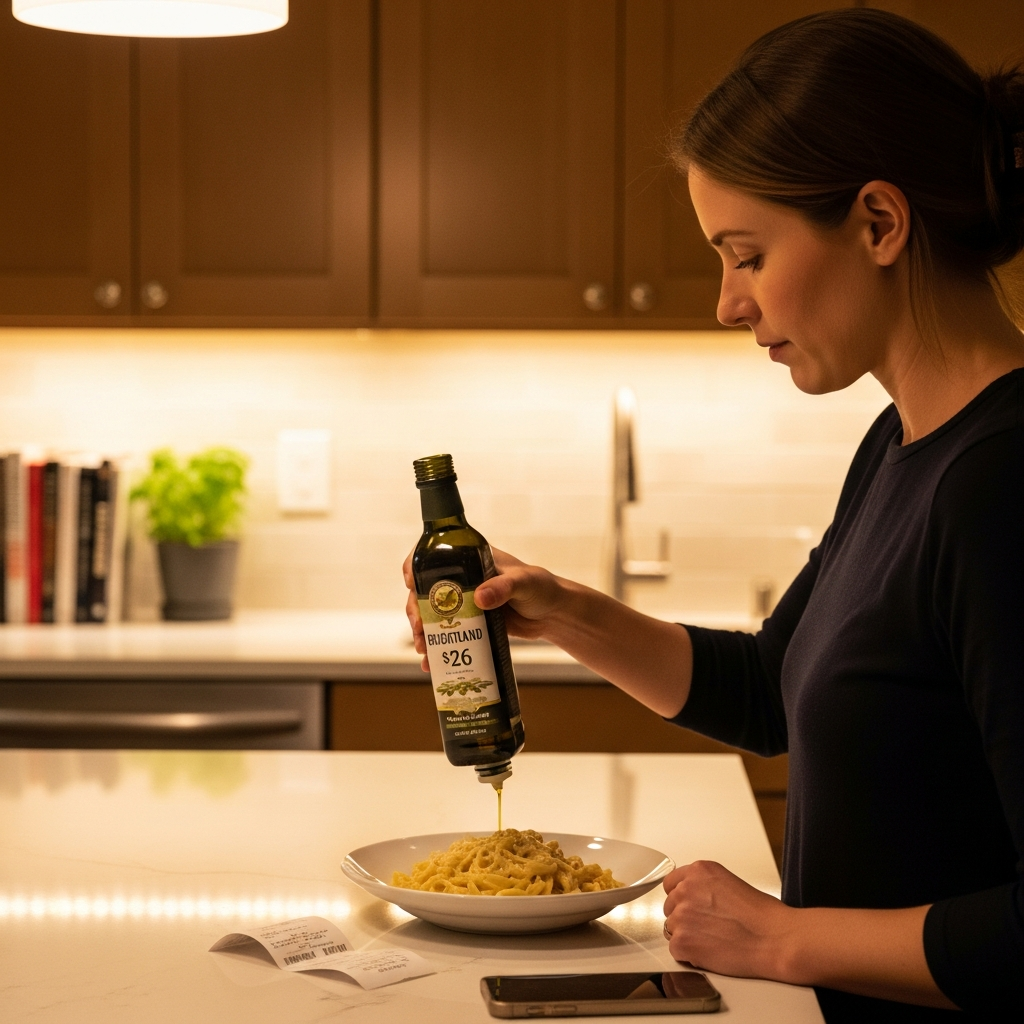
"It's $24. I use it three times a week on good food. That's less than $2 a use. The cheap oil is $8 and it tastes like nothing. I'm not paying for the bottle — I'm paying for the thing I'm going to taste."
— Claire W., 38 · Marketing Director · Newton, MA · Selective Upgrader archetype
8 Decision-Architecture Personas


Shoppers are significantly more likely to trade up in pleasure-delivering, identity-relevant, or socially visible categories than in functional commodities — regardless of price difference or income level.
The foundational hypothesis. Split-basket behavior (premium olive oil and store-brand paper towels in the same cart) suggested that category type was a stronger predictor of premiumization than income. This hypothesis tested whether that effect held under simulation conditions.
Claire's mental map of CPG categories is stable and resistant to marketing. It was built through personal experience, not brand communication. The categories that earn premium spend share a property: quality variation is perceptible and personally meaningful. Paper towels absorb equally regardless of brand. Olive oil does not taste equally regardless of brand.
First premium trial in a new category is triggered by a specific discovery moment — expert creator content or a trusted peer recommendation — rather than by price promotion or in-store messaging alone.
If creator content and peer referral outperform price promotion for first trial, media allocation strategy for premium discovery must shift accordingly. This hypothesis generated the highest single conversion delta in the study.
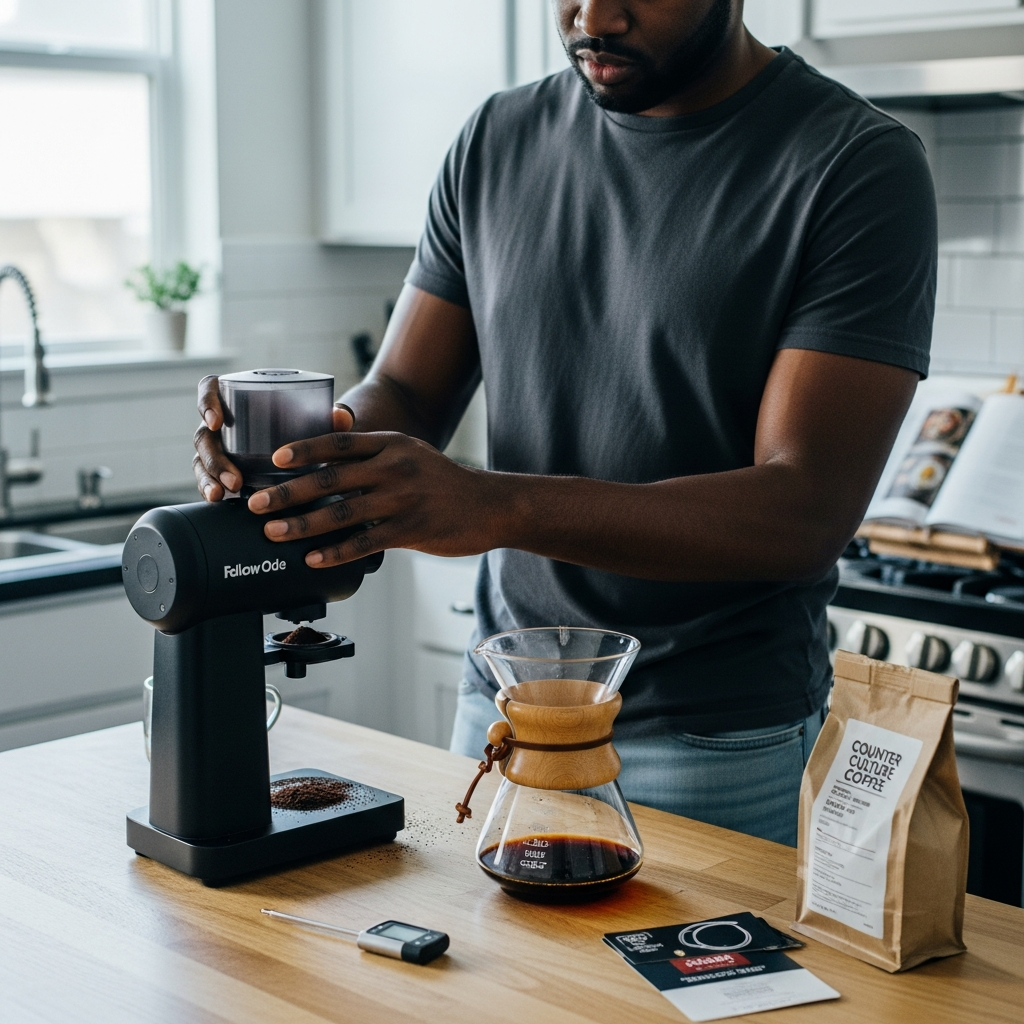
"I'm not paying for the brand. I'm paying for the processing. This one is anaerobic fermented — that's the reason the jasmine is there. If I bought the grocery store Ethiopian, I'd have a vaguely fruity coffee with no structural integrity. I know too much to unlearn that."
— Marcus T., 34 · Software Engineer · Austin, TX · Identity Curator archetype
Shoppers who actively trade down in commodity categories experience a psychological permission effect — they feel entitled to spend more in a designated pleasure category because they have "earned it" through discipline elsewhere in the basket.
If the permission architecture is real, messaging that acknowledges value discipline may activate premium spend — not by challenging the value identity, but by using it as the justification for the premium purchase.
Claire walks into Whole Foods having spent $14 less on cleaning supplies at Target that week, and that $14 is available both financially and emotionally for the $26 olive oil. The permission mechanism precedes the purchase decision — it is not post-hoc rationalization. For this archetype, messaging that acknowledges value discipline without challenging it resonates. The phrase "You already make careful decisions everywhere else" is not flattery. It is the premise of their own logic returned to them.
The effect does not generalize to Identity Curators (Marcus, James) who do not require permission because the premium purchase is identity-constitutive, or to Value Defaults (Tom) who require third-party evidence rather than permission framing.
A significant portion of premium purchases in visible or shareable categories are driven by the identity-signaling function of the purchase — what the item communicates about the buyer to herself and to her social circle — independent of the product's functional quality differential.
Identity-signaling premiumization is distinct from functional premiumization and requires completely different marketing tactics. If identity is driving purchase, quality awards are less relevant than provenance storytelling and domain-expert credibility.
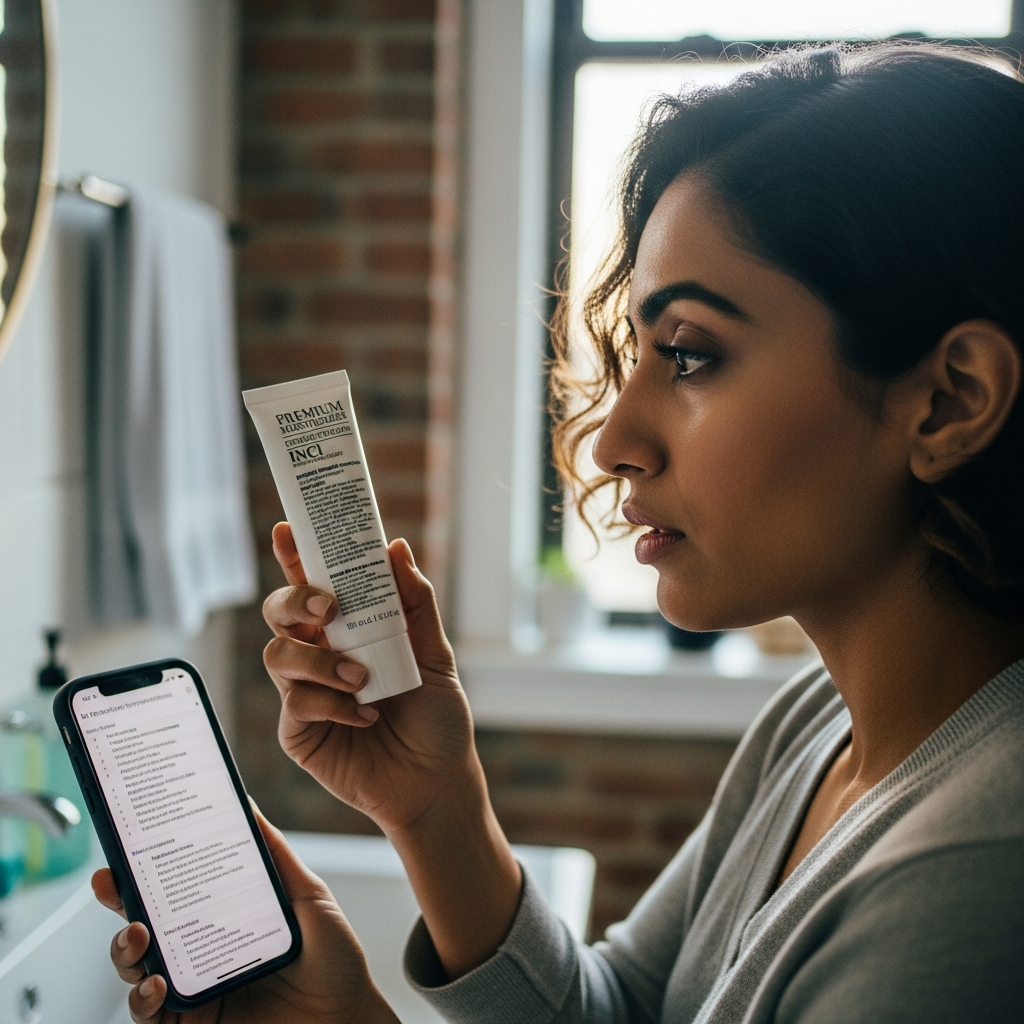
"I'm not going to have this face replaced. I need it to work well for another fifty years. The ceramides in my moisturizer maintain barrier function. Barrier function is the foundation of everything else. This is not vanity. It's maintenance."
— Priya S., 31 · UX Designer · Brooklyn, NY · Wellness Prioritizer archetype
Social occasions — dinner parties, hosting, gifting — function as a standing permission structure that converts one-time premium purchase into habitual repeat purchase, because the social context justifies the spend in a way that individual consumption cannot.
For the Host Investor archetype, the premium purchase is structurally dependent on the social occasion cycle. The intervention question is whether messaging can extend this logic beyond the occasion — creating new permission for self-directed premium spend.
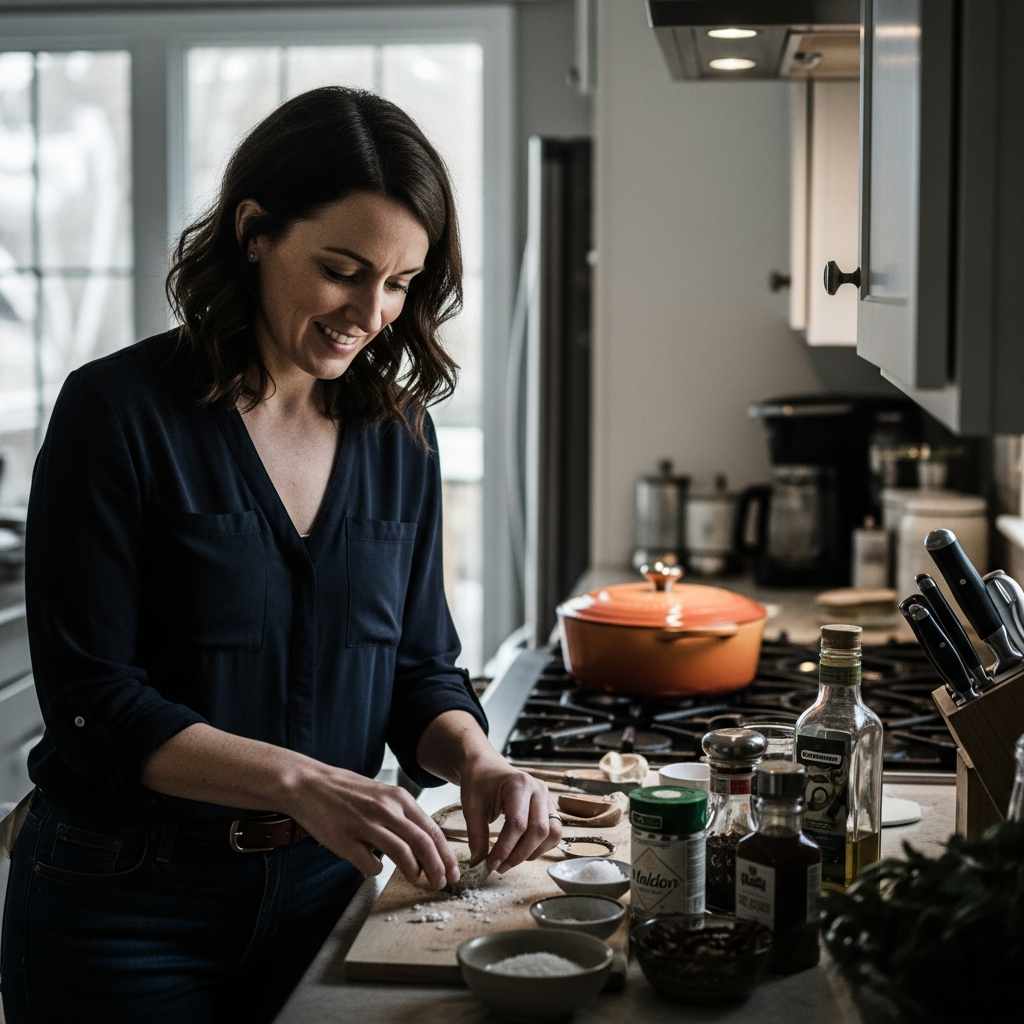
"Oh. That's — actually that's true. I would absolutely bring someone a tin of Jacobsen as a host gift without thinking twice. Why don't I have it in my pantry? That's a good question."
— Diane K., 44 · English Teacher · Naperville, IL · Host Investor archetype — on receiving the gift-to-self email
The gift-to-self reframe is more effective than occasion framing alone because it takes the permission logic Diane already has (it is appropriate to buy quality for other people) and extends it in a new direction: herself. She doesn't need to be convinced that quality is worth it — she already knows that. She needs to be shown that the beneficiary of that quality can be herself.
The mechanism is precise. If the framing is too direct or reads as marketing rather than genuine insight, it fails. It works best when the product is already recognized as a gift-worthy item — the logic only transfers if the product has established gift credibility.
Different intervention types have significantly different efficacy profiles across shopper archetypes. The intervention type mismatch — not the product — is the primary cause of premium conversion failure.
The actionable synthesis hypothesis. If intervention types are segment-specific, then media and conversion strategy must be architected by segment rather than category — which contradicts most current CPG practice. Two backfire tests confirmed the negative case.
Four interventions ready to deploy now
Ranked by adjusted score (conversion delta × confidence multiplier). Three are immediately deployable; one requires infrastructure build.
12 interventions scored and ranked
Adjusted score = simulated conversion delta × confidence multiplier (HIGH: 1.0, MEDIUM: 0.80, LOW: 0.60).
| # | Intervention | Δ Delta | Adj. Score | Confidence | Primary Segment |
|---|---|---|---|---|---|
| 01 | Friend referral / peer recommendation for premium discovery | 0.61 | 0.61 | High | Identity Curator |
| 02 | Ingredient transparency content for Wellness Prioritizer | 0.57 | 0.57 | High | Wellness Prioritizer |
| 03 | Creator content with domain expertise for premium discovery | 0.54 | 0.54 | High | Identity Curator · Wellness Prioritizer |
| 04 | Creator unboxing with flavor/story detail | 0.50 | 0.40 | Medium | Identity Curator (social expression) |
| 05 | Limited edition scarcity framing | 0.45 | 0.27 | Low | Identity Curator (social) — short-term only |
| 06 | Recipe QR code / use-case integration at shelf | 0.47 | 0.38 | Medium | Selective Upgrader |
| 07 | Gift-to-self permission framing | 0.44 | 0.35 | Medium | Host Investor · Selective Upgrader |
| 08 | Category story card with specific quality claims at shelf | 0.38 | 0.30 | Medium | Selective Upgrader |
| 09 | Quality credentialing placard at Costco / mass channel | 0.35 | 0.28 | Medium | Value Default |
| 10 | Occasion framing email for Host Investor | 0.25 | 0.20 | Medium | Host Investor (baseline only) |
| 11 | Before/after testimonial for Wellness Prioritizer | 0.20 | 0.12 | Low | Not recommended as primary strategy |
| 12 | Subscription framing for Value Default archetype | 0.05 | 0.05 | High | Not recommended — near-backfire effect |
Three permission architectures, four findings
The eight personas span four distinct permission architectures — the mental models that determine whether a premium purchase is possible at all, before the product quality or marketing message enters the picture.
Architecture 1: Deliberate Allocation
Claire and Tom (conditional). These shoppers have an explicit mental map of CPG categories divided into premium-permitted and commodity-default. The map is built through personal experience, not marketing. Claire has concluded through direct sensory experience that olive oil quality varies significantly and that variation is perceptible. She has concluded the inverse for paper towels. Her map is stable and resistant to revision. To update it, you need a piece of information specific enough to constitute genuine evidence — a number, a date, a named origin, a technique she can understand.
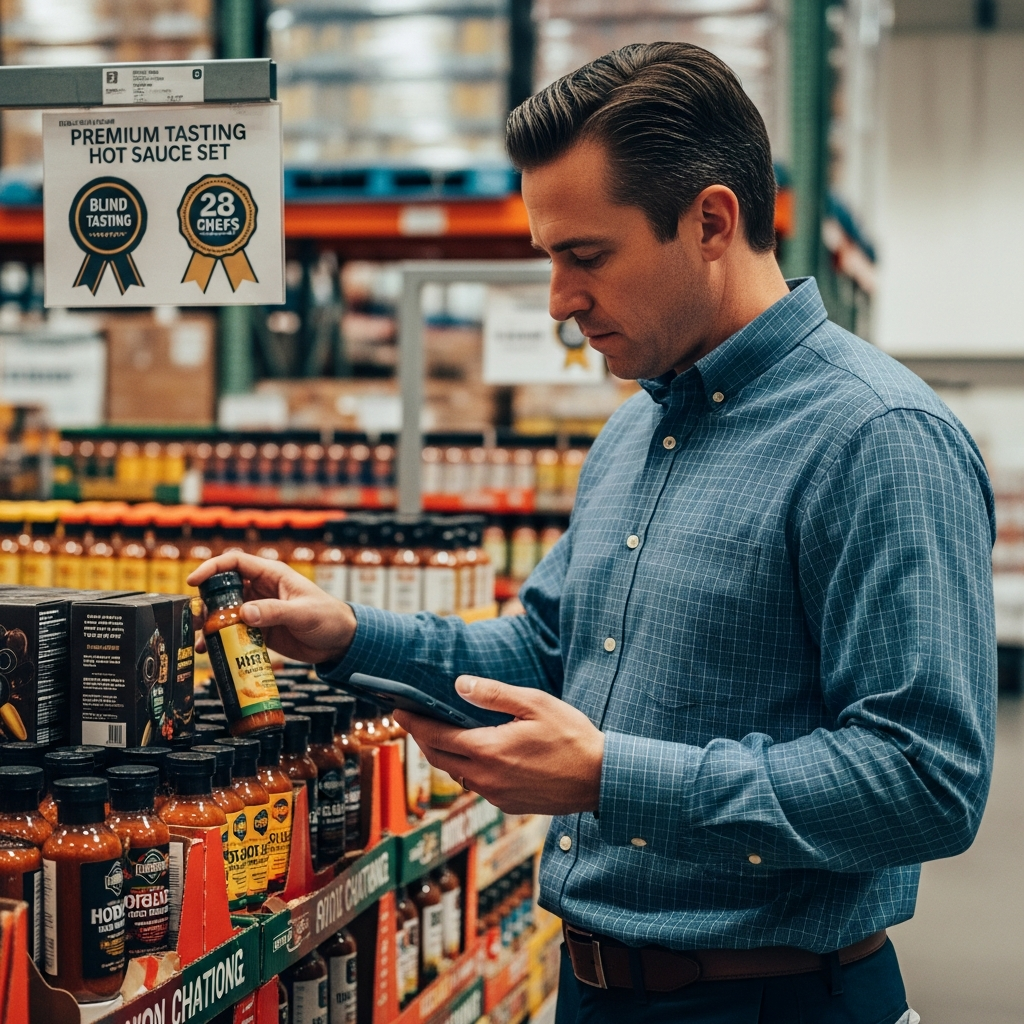
Tom's version of deliberate allocation is skepticism-based rather than experience-based. He defaults to store brand because premium claims have historically been unwarranted. His prior is shaped by a specific calibration experience: a Kirkland vs. national brand test that Kirkland won. To update his prior requires third-party, independent, specific evidence. The Costco blind tasting credential works for Tom not because of the product but because the credential architecture is specific enough to constitute evidence by his standard.
Architecture 2: Identity / Expertise
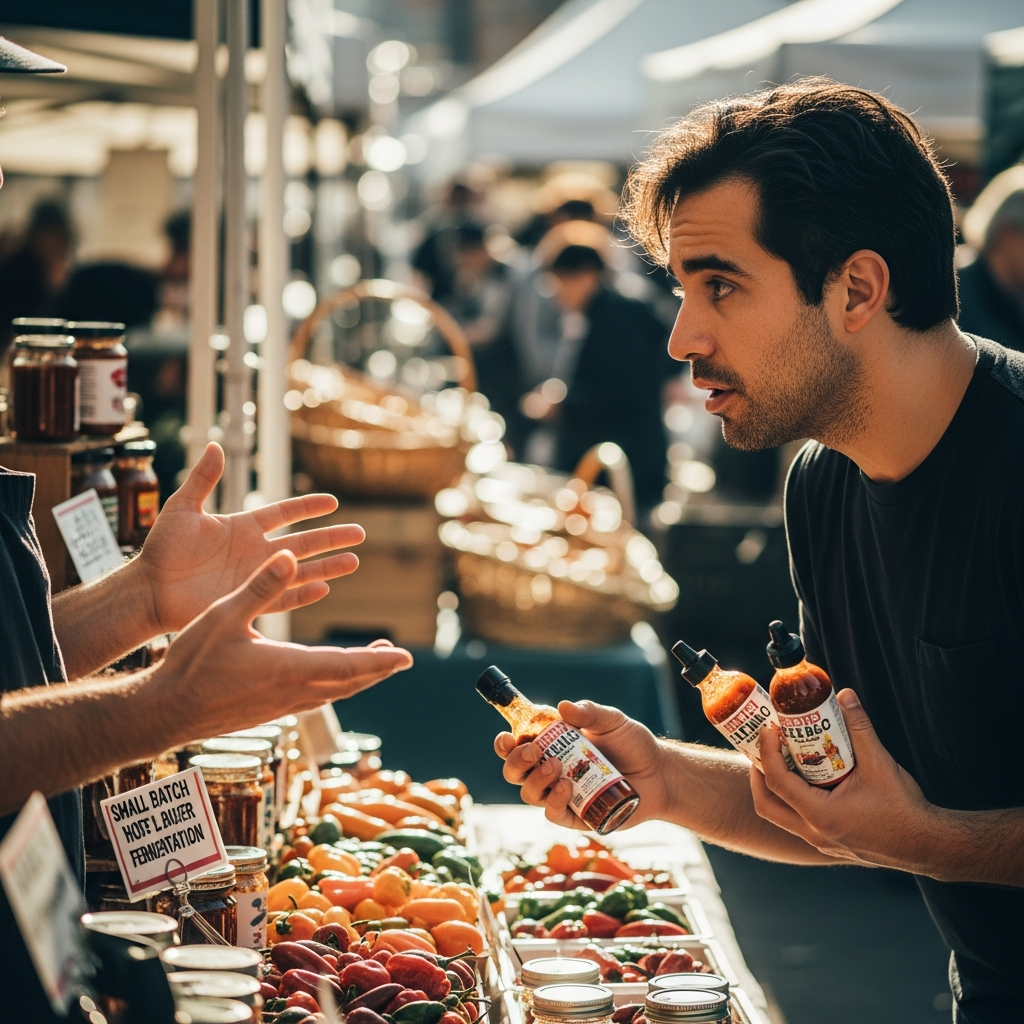
Marcus, Rachel, and James. For these personas, the premium purchase is constitutive of a self-concept rather than a consequence of quality evaluation. Marcus's coffee identity is expertise-based: he cannot un-know what commodity coffee tastes like after knowing good coffee. The identity investment came before the brand investment and is independent of it. Rachel's food identity is expertise-plus-audience: the product needs to be genuinely good and have content potential. James's hot sauce identity is the most constrained but also the most pure — expertise deployed at exactly the price point his income can sustain.
The failure mode for content aimed at these personas is aspiration-without-expertise: beautiful packaging, lifestyle photography, generic quality claims, or celebrity endorsement. These don't just fail — they mark the brand as not-for-them. The conversion mechanism is learning: the content must deliver information that updates the shopper's knowledge base, not their sense of aspiration.
Architecture 3: Social / Occasion
Diane and Sandra. These shoppers require a social or life-stage context to provide the justification structure for premium spend. Diane's premium purchases are locked to the occasion cycle — she buys Maldon before a dinner party and store-brand salt every other week. Between dinner parties, the commodity default applies without hesitation or guilt. The gift-to-self reframe works for Diane because it extends her existing permission logic in a new direction without asking her to abandon it.
Sandra's version is life-stage driven. For twenty years, a background constraint shaped every premium decision: this money is being managed for a family, for children's futures, for things that matter more than this. The empty nest has not changed her values — it has changed the constraints under which those values operate. She is now relearning what her preferences actually are when they are not mediated by the family constraint. Her premium behavior is emotionally richer than Claire's or Tom's: every premium purchase she makes is a small act of self-recognition.
Architecture 4: Functional Investment
Priya. Premium spend is a long-term investment in a biological substrate with documented returns. The framing is engineering, not aspiration. Priya's evidence standard is calibrated to the SkincareAddiction community — INCI nomenclature, clinical study summaries, formulation explainers that detail mechanism. "Clean beauty" claims without INCI-level specifics fail immediately. The content strategy for Priya requires mechanism explanations, not ingredient origin stories. Her loyalty is conditional on continued formulation integrity — she abandons brands that reformulate or soften their evidence claims.
What remains to be resolved
- 01 How does the permission architecture shift during economic recovery? This study was designed for an inflationary period. Does the Selective Upgrader expand her premium-permitted category list as financial pressure eases, or does the map remain stable regardless of income change? Longitudinal panel design required.
- 02 Can Identity Curator behavior be triggered in a category where the shopper has no existing knowledge base? Marcus could not extend premium purchasing to olive oil because he lacks the knowledge architecture to anchor it. What is the minimum intervention required to build a new knowledge base — and at what cost compared to the referral mechanism?
- 03 What is the advocacy multiplier for the Identity Curator referral? The simulation captured Marcus's same-session second-bag purchase and immediate sharing. It did not measure the downstream conversion rate of the referred friend, or the chain-referral behavior that high-expertise peer networks produce. The adjusted score of 0.61 is likely a floor.
- 04 How does retail channel mediate the permission architecture? The channel identity hypothesis (Whole Foods vs. Target vs. Costco as identity signal) was pruned from this study as a confounding variable. A study specifically designed around channel × archetype interaction would clarify whether the Costco credential mechanism generalizes to other mass channels.
- 05 What is Sandra's 24-month trajectory? The restraint-release architecture is a transitional state, not a stable archetype. As Sandra consolidates her post-restriction premium preferences, she will likely settle into a Selective Upgrader pattern similar to Claire's. Tracking that transition would reveal how brands can position themselves during the high-receptivity window.
Ready to map your premium buyer's decision architecture?
This study used 8 decision-architecture personas to reveal why the same shopper trades up in one category and down in another. We can run the same analysis for your specific category, brand position, and target segment — in weeks, not months.